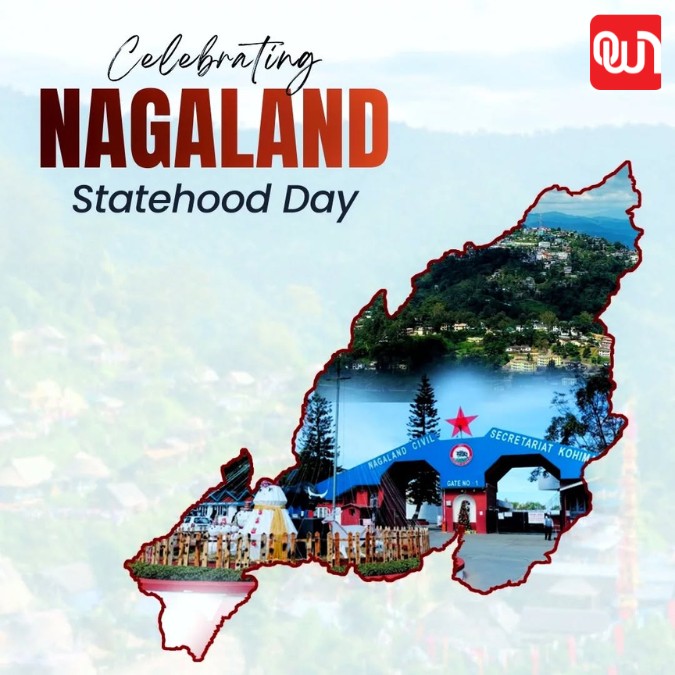

Nagaland observed its 63rd Statehood Day on December 1 with wide participation across the state, celebrating cultural heritage, community solidarity, and progress. The anniversary commemorates the coming into force of the State of Nagaland Act, 1962, on December 1, 1963, which created a distinct political identity, a legislative assembly, and an administrative framework for the Naga people.
Historical significance
The 63rd anniversary recalled the efforts and sacrifices of early leaders who sought to preserve cultural identity while establishing political stability and representation. Statehood opened avenues for self-governance, development, and a stronger voice for Nagaland within the Indian Union, creating the foundation for the state’s institutions and public life.
Statewide observances
Events took place across districts, with the central ceremony in Kohima. Official proceedings included the hoisting of the national flag, a ceremonial parade involving police, home guards and school contingents, and addresses by political and community leaders. The programs underscored the day’s civic and symbolic importance.
Cultural celebrations
Traditional cultural troupes from various Naga tribes enlivened the festivities with dance, folk song and distinctive attire. Performances featuring indigenous instruments and rhythmic displays showcased Nagaland’s ethnic diversity and reinforced a shared cultural bond among communities.
Message of unity and progress
In his Statehood Day address, the Chief Minister stressed the need for unity, inter-tribal cooperation and lasting peace as prerequisites for sustained development. He highlighted recent gains in infrastructure, tourism promotion, education and digital connectivity, and paid tribute to pioneers of the Naga political movement whose dedication continues to inspire younger generations.
Development and youth focus
The day also served to review developmental achievements—better road links, expanded healthcare access and programs to promote eco-tourism were noted. Increasing attention to skill development, entrepreneurship and youth engagement reflects efforts to prepare a dynamic local workforce. Nagaland’s young people are active in music, sports, technology and community initiatives, and government and civil-society programs aim to provide training and platforms for their talents.
Community participation and legacy
Beyond official functions, schools, cultural groups and villages marked the occasion with exhibitions, essay contests, sports meets and communal feasts. Elders shared memories of the state’s early years, connecting younger residents to their history and strengthening a sense of belonging.
Looking ahead
As Nagaland moves toward its 64th year, the 63rd Statehood Day reaffirmed resilience, cultural richness and collective resolve. With ongoing efforts toward peace, development and youth empowerment, the state looks ahead with cautious optimism, seeking shared progress through unity and collaboration.


