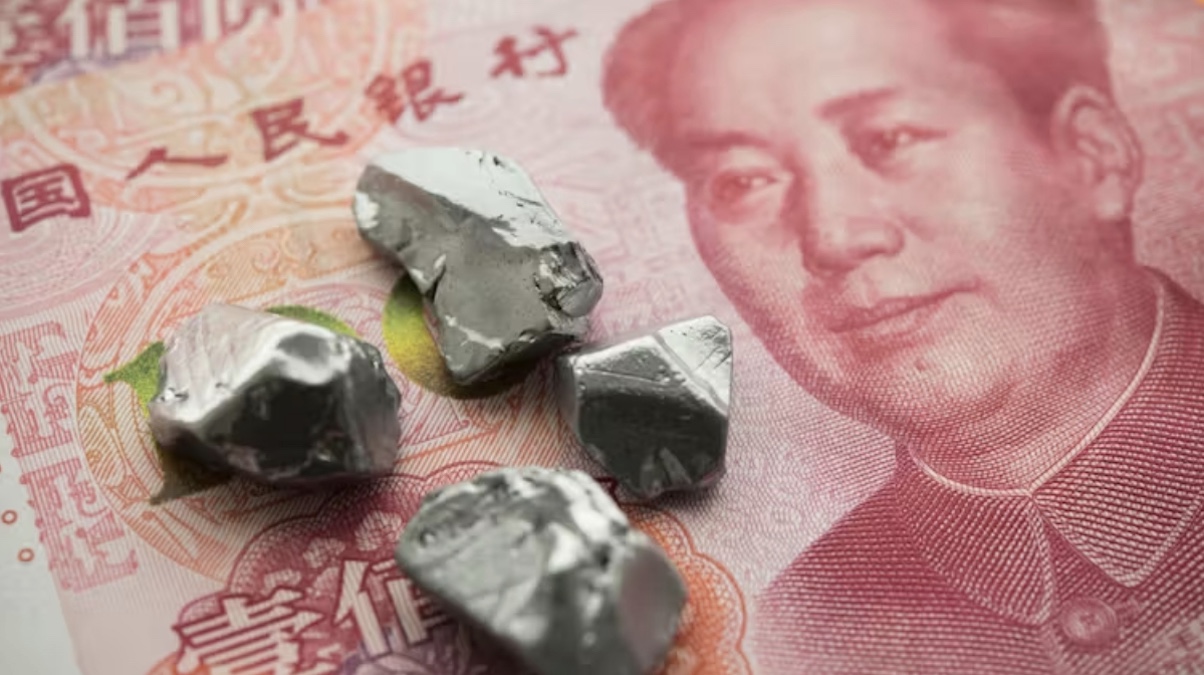

Rare earth elements have become a strategic fault line in global competition. These minerals are indispensable for everything from advanced weapons and medical devices to AI chips and electric vehicles, yet supply is highly concentrated—and Europe is exposed.
China dominates the markets for rare earths, controlling as much as 80–90% of processing and a large share of global trade. That dominance was built over decades: commercial-scale mining began at Bayan Obo in Inner Mongolia in the 1950s, capacity grew through the 1990s, and China has since expanded extraction and refining both at home and through projects abroad, notably in parts of Africa. When demand accelerated with the green-energy transition and the expansion of high-tech electronics, China already had the industrial networks and refining capacity to meet global needs.
By contrast, the EU has limited domestic production and relies heavily on imports. Dependence on Chinese supplies varies by element, with estimates ranging roughly from 40% up to nearly 100% for certain materials. That concentration has made Europe vulnerable to trade pressure and export controls.
Political and trade tensions have exposed this vulnerability. In April 2025 Beijing announced tighter export restrictions on several rare earths. The issue was a prominent topic at the EU–China summit in July, where a tentative easing was negotiated. Tensions flared again after the Netherlands moved to seize control of Nexperia, a chipmaker owned by a Chinese group, on national-security grounds. In response, on October 9 China placed further limits on exports to the EU—requiring licences for products containing more than 0.1% Chinese rare earths and banning exports tied to weapons production—moves that risked significant disruption to European manufacturers. The Netherlands later suspended the Nexperia action in November as a gesture to lower tensions.
Faced by what EU officials described as economic coercion, Brussels weighed activating an “anti-circumvention” tool adopted in late 2023 for use against third-country coercive measures. Instead, it pursued two tracks: diplomacy to secure supplies and a push to diversify sources and build resilience at home.
On the diplomatic front the Commission established a special channel to prioritise requests from EU firms; more than half of roughly 2,000 applications were approved soon after the channel opened. In early November the EU joined a trilateral or parallel understanding involving the United States and China that resulted in a temporary, one-year relaxation of China’s export curbs. European leaders also signalled they might use reciprocal trade measures, such as tariffs, to press Beijing—pressure that likely helped produce a deal.
But negotiation alone is not a durable solution because China can—and has—used its market position as leverage. Recognising that, the EU has accelerated efforts to reduce single-supplier dependence. In 2023 Brussels adopted a new regulation to secure critical raw materials and launched RESourceEU, a strategy modelled on the REPowerEU energy plan. The aim is threefold: increase domestic extraction and processing where feasible, secure supplies from willing third countries, and scale up recycling and “urban mining” from electronic waste.
Each of those options carries costs and complications. New mines and processing plants are expensive, face long permitting and environmental review timelines, and often encounter local opposition. Sourcing from other countries can create complex, fragile supply chains and raise geopolitical trade-offs. Recycling and urban mining offer promising circular-economy benefits, but technological, collection and investment hurdles remain before they can supply a substantial share of industry demand.
Despite the difficulties, diversification is a strategic necessity. Reducing reliance on a single dominant supplier will help protect Europe’s manufacturing base, secure military and civilian supply chains, and strengthen the bloc’s strategic autonomy.
Gracia Abad Quintanal is profesora agregada de relaciones internacionales, Universidad Nebrija.
This article is republished from The Conversation under a Creative Commons license.


