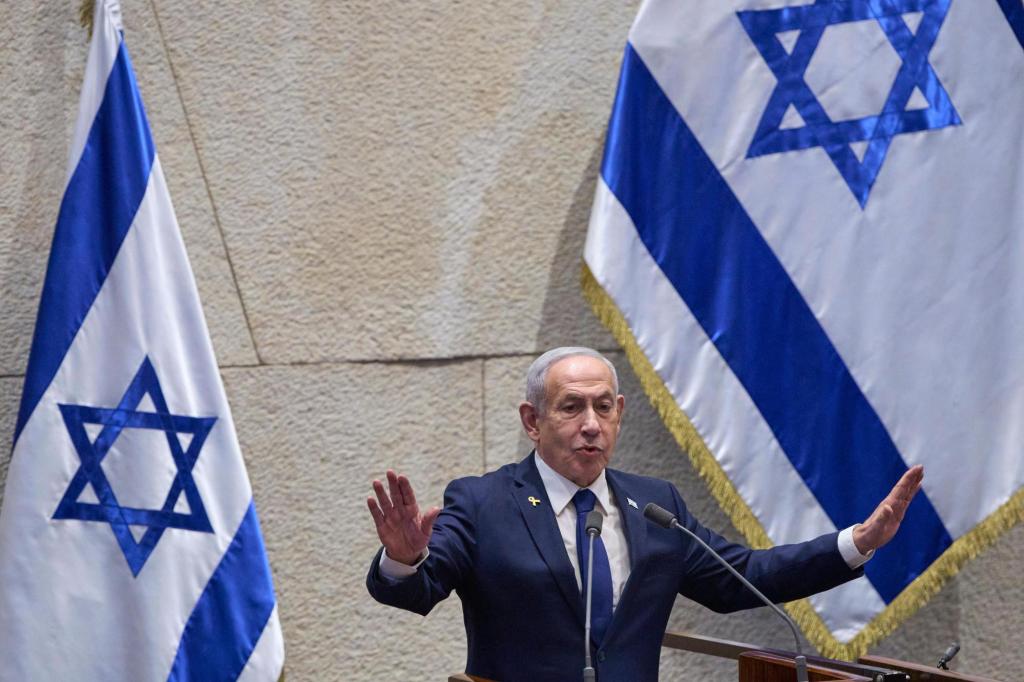

Israeli Prime Minister Benjamin Netanyahu has asked President Isaac Herzog for a pardon while he remains on trial for long-running corruption charges. The president’s office described the petition as “extraordinary” with significant implications for public confidence in Israel’s justice system and for Netanyahu’s political standing.
The charges against Netanyahu make him the first sitting Israeli prime minister to face a criminal trial. He is indicted in three cases on counts of fraud, breach of trust and accepting bribes, accused of trading official favors for benefits from a telecom firm, a Hollywood producer and a newspaper publisher. The Justice Ministry brought the indictments in 2019 after an extended investigation and the trial began in May 2020. Netanyahu denies any wrongdoing, has called the prosecutions politically motivated, and has not been convicted.
The proceedings have been repeatedly delayed. Netanyahu at times postponed testimony citing diplomatic duties or security concerns tied to Israel’s conflicts with Hamas, Hezbollah and Iran. Political deadlock and his return to office in late 2022 also contributed to delays. Those postponements prompted public anger in some quarters, including criticism from families of hostages held in Gaza who say the legal and political impasse has affected government attention to the crisis.
Netanyahu and his supporters argue a pardon would reduce national tensions and allow reconciliation amid shifting regional dynamics. He has characterized the legal campaign against him as the work of a “deep state” seeking to remove him and argues a quick end to the trial would cool social divisions. Several ministers, including Defense Minister Israel Katz, have publicly backed the pardon request. Former U.S. President Donald Trump also wrote to Herzog urging clemency, a point Netanyahu referenced in his filing. President Herzog has said he prefers a negotiated settlement between prosecutors and Netanyahu’s legal team as the best path to resolution.
Critics contend a pre-conviction pardon would damage democratic norms by putting officials above the law and avoiding accountability. Analysts at the Israel Democracy Institute and other legal experts warn such a step risks undermining equality before the law and public faith in institutions. Opposition leader Yair Lapid has said a pardon should not be granted without an admission of guilt, remorse and political withdrawal. Legal commentators note that a pardon itself does not automatically stop criminal proceedings; decisions about continuing or halting a trial ultimately involve prosecutors and the attorney general. Former Justice Ministry official Emi Palmor has stressed that ending the case through prosecutorial channels, not unilateral clemency, is the appropriate legal route.
The pardon petition will first be reviewed by the Justice Ministry and then by the president’s legal adviser, who will collect further opinions. The president has wide discretionary authority to grant pardons and there is limited formal oversight of that power. Pardons issued before conviction are rare in Israel, and their use in ongoing cases is widely viewed as fraught with legal and political risk.


