
The Navy has halted the Constellation-class frigate program and will finish only the two hulls already under construction. Constellation — conceived to replace the problematic Littoral Combat Ship (LCS) with an AEGIS-equipped, anti‑submarine and air‑defense capable escort — has been delayed by roughly three years, with first delivery now pushed into 2029 and operational entry likely slipping into the early 2030s after additional testing.
Constellation’s troubles are partly self-inflicted. The Navy adopted a variant of the Italian FREMM design but altered it so extensively during construction that commonality with the original design dropped to about 15 percent. Major systems, notably the ship’s power plant, remained uncompleted and unproven at cancellation — a risky situation given prior propulsion failures in the LCS program and problems on some allied carriers.
The backdrop to this failure is the still‑troubled LCS fleet. Built with minimal organic weapons and high operating costs, the LCS was judged by Navy experts as unlikely to survive in contested combat. The fleet still numbers 25 ships (11 Freedom class, 14 Independence class), although seven have already been scrapped. Each LCS with its mission packages costs roughly $500 million to procure and about $70 million a year to operate. Retiring the entire LCS force would free substantial funds and personnel immediately.
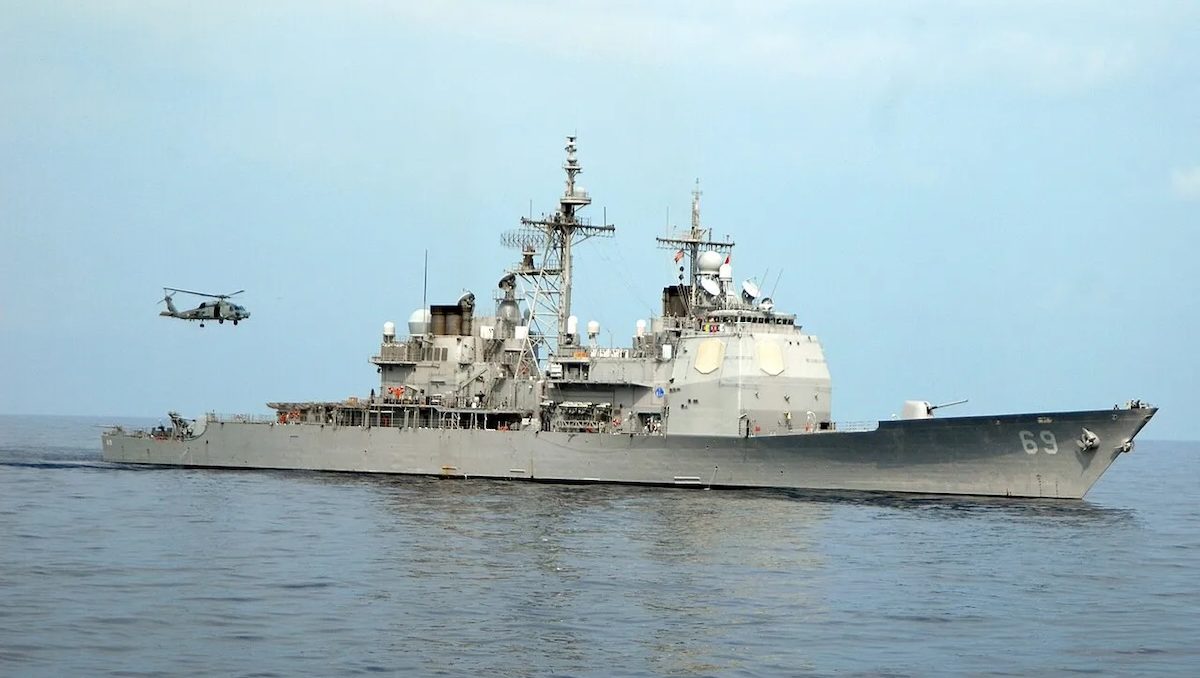
At the same time the Navy has been shedding Ticonderoga-class cruisers — platforms that actually deliver many of the capabilities Constellation was meant to provide. Of the 27 Ticonderogas built from 1983–1994, 15 have been decommissioned and five scrapped; several hulls sit in the Reserve Fleet and six more are slated for retirement. The Navy invested roughly $3.7 billion modernizing seven cruisers to extend service lives; four of those modernized ships (USS Vicksburg, USS Cowpens, USS Leyte Gulf and USS Antietam) were decommissioned before returning to service, representing about $1.84 billion in sunk modernization costs.
In a recent decision three cruisers (USS Gettysburg, USS Chosin and USS Cape St. George) had their service lives extended only through 2029 — an extension expressly timed to align with Constellation deliveries that are now canceled.
Ticonderoga cruisers remain potent platforms. They carry the AEGIS combat system and two MK-41 vertical launch systems — up to 122 cells — capable of firing SM‑2, SM‑3 and SM‑6 interceptors, Tomahawk cruise missiles, and ASROC anti‑submarine rockets. They also field Evolved Sea Sparrow missiles, two 5‑inch guns, two Phalanx CIWS mounts, Harpoon anti‑ship missiles and Mk 3 torpedoes. Those capabilities are directly relevant to fleet air defense, long‑range strike and anti‑submarine warfare.
Given Constellation’s cancellation and continuing LCS shortcomings, it is reasonable and prudent to ask why the Navy continues to retire cruisers that can provide immediate, validated fleet capabilities. At least four upgraded Ticonderoga hulls could likely be returned to service more quickly and at lower cost than building new escorts. Additional cruisers might be rebuilt or recommissioned as budgets and needs dictate. Reactivating modernized hulls would boost fleet air‑defense and strike capacity far faster than waiting for new Arleigh Burke destroyers to come online.
The Navy’s current surface ship plan favors more Arleigh Burke destroyers — a program that envisions about 12 new ships at roughly $2.5 billion apiece (weapons excluded). U.S. yards can construct only about two Burkes per year, so at most six might be completed by 2029. That pace cannot quickly replace the capabilities lost by retiring cruisers while Constellation has been canceled.
A practical course is to retire the combat‑unsuitable LCS force, redirect those procurement and operating savings toward reactivating and sustaining Ticonderoga cruisers, and continue new‑build programs in parallel. This approach would buy time and capacity: immediate increases in air defense and strike reach from reactivated cruisers, while Arleigh Burke production and future designs proceed.
This piece first appeared on the Substack newsletter Weapons and Strategy and is republished with permission. Author: Stephen Bryen, former U.S. Deputy Undersecretary of Defense.


