
The US Navy has canceled the Constellation-class frigate program and will complete only the two ships already under construction. The frigate program had already been delayed three years, with first delivery pushed to 2029 and additional testing likely postponing fleet entry until the early 2030s.
The Constellation frigate was intended to replace the flawed Littoral Combat Ship (LCS) and to field AEGIS air‑defense and anti‑submarine capabilities while keeping pace with carrier task forces. The LCS — built with minimal organic weapons and high operating costs — was judged by Navy experts as unlikely to survive in combat. The fleet still includes 25 LCSs (11 Freedom class, 14 Independence class), though seven have been scrapped. Each LCS, with mission packages, costs around $500 million and about $70 million per year to operate. Dumping the entire LCS force would save substantial money and personnel.
Constellation itself suffered from starting construction before its design was finished. The Navy selected a variant of the Italian FREMM design but changed it so extensively that the final design shared only about 15% commonality with the original. At cancellation time the ship’s power plant remained unfinished and untested — a serious risk given earlier propulsion failures in the LCS program and in British carriers.
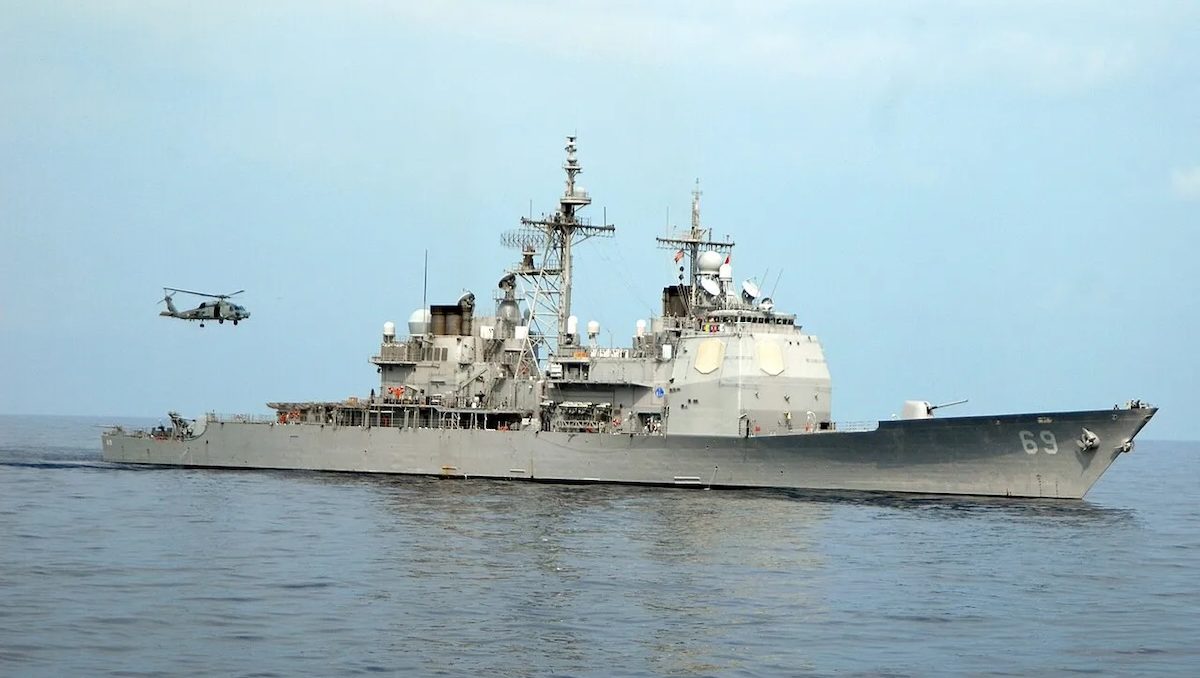
While struggling with these shipbuilding failures and rising costs, the Navy has been decommissioning Ticonderoga-class cruisers, even though those ships provide capabilities the Constellations would have offered. Of the 27 Ticonderoga cruisers built between 1983 and 1994, the Navy has decommissioned 15 and scrapped five; several others sit in the Reserve Fleet and six more are slated for decommissioning. The Navy spent about $3.7 billion to modernize seven cruisers to extend their service lives. Four of those modernized ships — USS Vicksburg, USS Cowpens, USS Leyte Gulf and USS Antietam — were decommissioned before returning to service, representing roughly $1.84 billion in sunk modernization funds.
A recent decision extended the service life of three cruisers — USS Gettysburg, USS Chosin and USS Cape St. George — only through 2029, timed to coincide with the expected arrival of Constellation frigates that are now canceled.
Ticonderoga cruisers carry the AEGIS combat system and two MK-41 vertical launch systems (up to 122 cells) capable of firing SM-2, SM-3 and SM-6 air‑defense missiles, Tomahawk cruise missiles, and ASROC anti‑submarine rockets. They also field Evolved Sea Sparrow missiles, two 5‑inch guns, two Phalanx close‑in weapon systems, Harpoon anti‑ship missiles and Mk 3 torpedoes. Those capabilities remain relevant for fleet air defense, long‑range strike and anti‑submarine warfare.
Given the Constellation cancellation and continuing LCS shortcomings, it is reasonable to ask why capable Ticonderoga cruisers are being retired when they could be reactivated. At least four upgraded cruisers could be returned to service relatively quickly and at lower cost than new construction; others may be rebuilt and recommissioned as needed. Reactivating modernized hulls would augment the surface fleet far faster than waiting for new Arleigh Burke destroyers.
The Navy prefers to build more Arleigh Burke destroyers — it plans 12 new ships at roughly $2.5 billion each (weapons not included). US yards can build about two Burkes per year, so as many as six might be completed by 2029. Meanwhile, money saved by retiring the combat‑unsuitable LCS force could be redirected to resuscitating Ticonderoga cruisers, providing capable, immediate increases in fleet air‑defense and strike capacity while new‑build programs continue.
Former US Deputy Undersecretary of Defense Stephen Bryen is a senior Asia Times correspondent. This article first appeared on his Substack newsletter Weapons and Strategy and is republished with permission.


