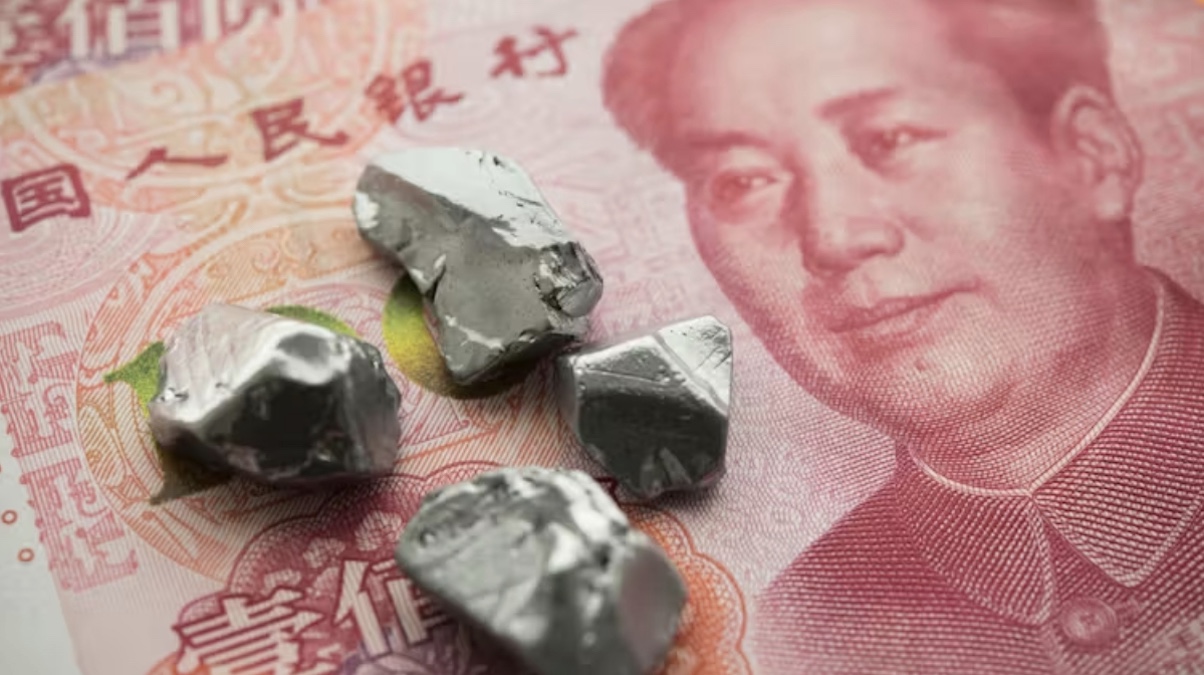

In recent years rare earth elements have become central to renewed strategic competition. These materials are essential for a wide range of products, from weapons and medical devices to AI hardware and electric cars.
The United States and Europe face a structural disadvantage because China controls up to 90% of global trade in rare earths. Beijing built this dominance over decades, beginning with mining at Bayan Obo in Inner Mongolia in the 1950s and expanding production and refining capacity through the 1990s. Today China extracts rare earths domestically and abroad—especially in Africa—and still performs much of the refining.
When demand surged due to renewable energy and advanced electronics, China already had the networks and capacity to supply global markets. Europe, by contrast, lags in production and relies heavily on imports from China—estimates put EU dependence between roughly 40% and nearly 100% depending on the material.
Tariffs and state intervention have highlighted the EU’s vulnerability. The three-way tariff tensions among the US, EU and China over the past year drew attention to Europe’s need to secure affordable supplies. Beijing has shown it will protect its advantage: in April 2025 it introduced strict export restrictions on rare earths, which featured prominently at the EU-China summit in July, where a tentative easing was agreed.
Tensions rose again after the Dutch government moved to take control of Nexperia, a China-owned chipmaker in the Netherlands, citing intellectual property circumvention. China responded on October 9 by imposing further limits on exports to the EU, including export licences for products containing more than 0.1% Chinese rare earths and bans on rare earth exports for weapons production—moves that threatened major disruption to European manufacturing. The Netherlands later suspended the Nexperia seizure in November as a goodwill gesture.
Faced with what officials called economic blackmail, the EU considered activating an “anti-circumvention” mechanism adopted in late 2023 to respond to coercive measures by third countries. Instead, Brussels has pursued two complementary approaches: negotiate with China to secure supplies and diversify sources.
On the negotiation track, the European Commission set up a “special channel” with China to prioritise EU company requests; more than half of roughly 2,000 requests submitted were approved shortly after the channel opened. In early November the EU joined a US–China agreement that led China to temporarily relax export restrictions for one year. Reports suggest the EU also signalled consideration of measures such as reciprocal tariffs to compel China to supply rare earths, which may have helped produce the deal.
Diversification remains essential because China is willing to leverage its dominance. The EU adopted a new regulation in 2023 to secure critical raw materials and launched the RESourceEU plan, modeled on the REPowerEU energy diversification strategy. Diversification will rely on increasing production within the EU, sourcing from third countries, and expanding recycling and “urban mining” of electronic waste—important because Europe lacks active rare earth mines today.
These alternatives face economic and environmental challenges, including higher costs and complex supply-chain hurdles. Nonetheless, reducing dependence on a single dominant supplier is a strategic imperative if the EU is to protect its manufacturing base and maintain strategic autonomy.
Gracia Abad Quintanal is profesora agregada de relaciones internacionales, Universidad Nebrija
This article is republished from The Conversation under a Creative Commons license.