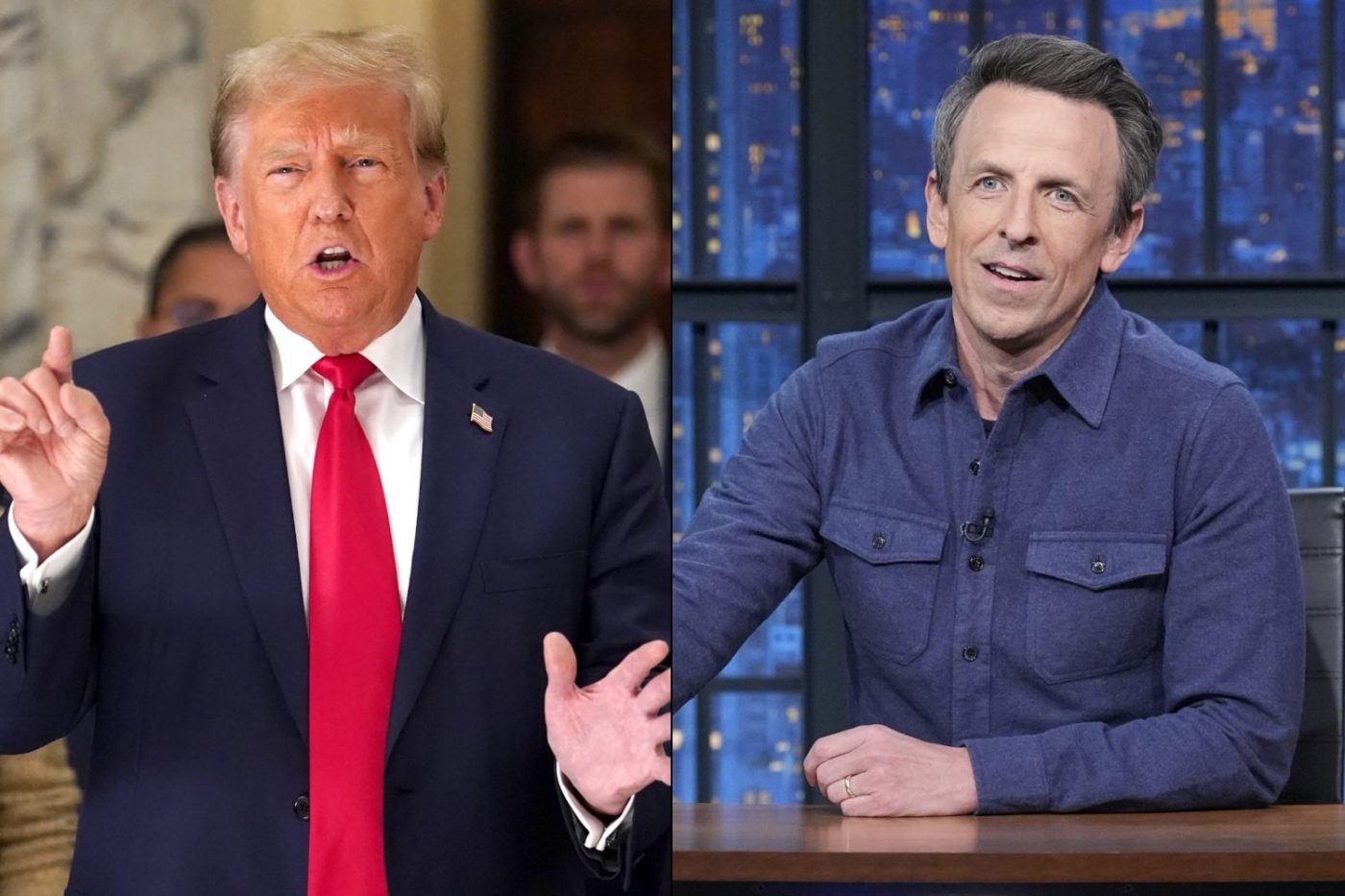

Donald Trump has a recurring problem with comedians and critics, and his reaction to a Seth Meyers monologue this month fits a familiar pattern of hypersensitivity to satire. Trump wrote on Truth Social that the Meyers segment was “100% ANTI TRUMP, WHICH IS PROBABLY ILLEGAL!!!” and later urged broadcaster NBC to fire Meyers — a post that was reshared by the chair of the Federal Communications Commission.
Meyers is only the latest in a long line of entertainers to draw Trump’s ire, joining the likes of Taylor Swift, Bruce Springsteen, Jimmy Kimmel and Stephen Colbert when they criticize his administration. The exchanges can seem humorous, but they also raise worrying questions about the state of free expression in America — especially with the nation approaching the 250th anniversary of the Declaration of Independence and the constitutional protections it inspired.
Democratic Senator Edward Markey responded to Trump’s attack on Meyers with a resolution rebuking the president’s suggestion that criticism could be illegal, stressing that in the United States “criticizing the President is not a crime. It is a constitutional right.” Markey pointed to the First Amendment in the Bill of Rights, which forbids Congress from abridging freedom of speech or the press. Republicans, however, blocked the resolution.
Trump’s apparent desire to avoid criticism evokes an ancient legal concept: crimen maiestatis, the Roman law protecting the dignity of emperors, which evolved into the European notion of lèse‑majesté that criminalizes insults against monarchs. That idea persists today in some countries: Thailand and Cambodia still make criticism of the royal family a criminal offense. The impulse to shield leaders from public derision is consistent with an expansive view of executive power.
Historically, monarchs treated insults as treason. From the medieval era until the French Revolution, offending the sovereign could carry extreme penalties. Over time, many societies responded by protecting press freedom, though such rights have never been permanent or absolute. Sweden issued the first law guaranteeing freedom of the press in 1766, but even that statute included exceptions for blasphemy and attacks on the king and officials; royal censorship returned temporarily before the full principle took hold.
The United States enshrined free speech in 1791, but it too has seen restrictions during crises. The Sedition Act of 1798 criminalized “false, scandalous, or malicious” writings against the president and government — a measure so unpopular that it helped cost John Adams the presidency in 1800. The act expired quickly, but other wartime and emergency laws have recurred. In a modern echo, the Trump administration revived the long-unused Alien Enemies Act to deport alleged Venezuelan gang members to El Salvador.
The tension between protecting leaders’ dignity and preserving robust criticism is long-standing. Thomas Jefferson promoted free speech in principle but expressed frustration when personally attacked; in 1802, amid accusations about his private life, he lamented abuses of the press while ultimately trusting public judgment to distinguish truth from falsehood. Lyndon Johnson, likewise antagonistic toward the media and defensive about jokes at his expense, later reflected that being the target of satirists is “part of the price of leadership” in a free nation and praised the value of humor.
Trump’s rhetoric suggests he leans more toward protecting himself from critique than Jefferson or Johnson did. He has complained that overwhelmingly negative coverage should not be considered free speech and has suggested such reportage might be “illegal.” Critics warn this perspective risks reviving a modern form of lèse‑majesté in which leaders seek legal or political means to punish dissent and satire.
The American tradition of free speech has always been contested and periodically constrained, but it remains a foundational democratic principle. The debate over Trump’s attacks on comedians and media figures is thus more than personal grievance: it is a test of how much tolerance a republic will allow for public criticism of its leaders.


