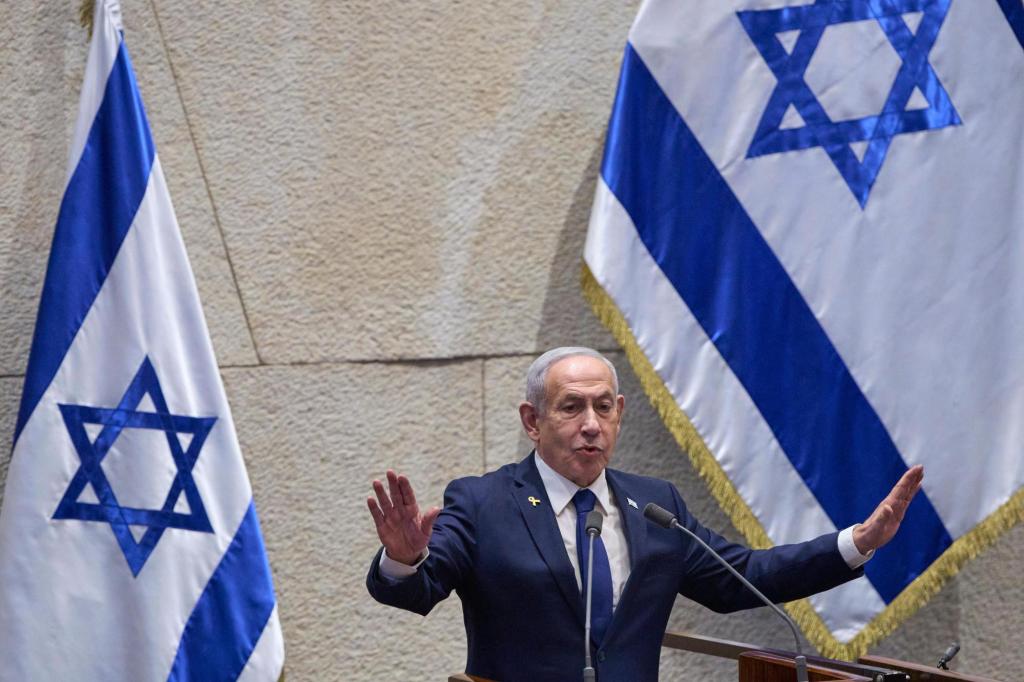

Israeli Prime Minister Benjamin Netanyahu has asked President Isaac Herzog for a pardon while he stands trial on long-running corruption charges — a move that has deepened political divisions and drawn sharp criticism from opponents and watchdogs, even as some Israelis and government allies signaled support.
The president’s office called the request “extraordinary” with “significant implications.” At stake are public confidence in Israel’s justice system and Netanyahu’s political standing.
The charges
Netanyahu is the first sitting Israeli prime minister to face trial. He is indicted on fraud, breach of trust and accepting bribes in three separate cases, which allege he traded official favors for benefits from a telecom company, a Hollywood producer and a newspaper publisher. The Justice Ministry brought the indictments in 2019 after years of investigation; the trial began in May 2020. Netanyahu denies wrongdoing, calling the prosecutions a media-judiciary “witch hunt.” He has not been convicted.
The trial has been repeatedly delayed. Netanyahu has postponed testifying at times for diplomatic work or citing security concerns tied to Israel’s recent conflicts with Hamas, Hezbollah and Iran. Political stalemate and the return of Netanyahu to office in late 2022 also contributed to earlier delays. Those postponements have stirred public anger, including from some families of hostages held in Gaza who accused the prime minister of prolonging conflict for political survival.
Netanyahu’s case for a pardon
Netanyahu and supporters argue that a pardon would help calm national tensions and enable reconciliation amid shifting regional dynamics. He has framed himself as targeted by a “deep state” intent on ousting him and said ending the trial quickly would lower societal flames. Several ministers, including Defense Minister Israel Katz, voiced backing. Former U.S. President Donald Trump urged a pardon in recent weeks, calling the case “political” in a letter to Herzog; Netanyahu referenced that appeal in his statement. Herzog has previously suggested a negotiated settlement between prosecutors and Netanyahu’s lawyers would be the best route to conclude the matter.
Criticism and legal limits
Critics say a pre-conviction pardon would erode democratic norms and signal that officials can be placed above the law. Yohanan Plesner of the Israel Democracy Institute said the move avoids any accountability and could distort public norms. Opposition leader Yair Lapid said a pardon should not be granted without an admission of guilt, remorse and political retirement. Legal experts note a pardon does not, by itself, stop a criminal trial; only the attorney general can decide to halt proceedings. Emi Palmor, a former Justice Ministry director general, emphasized that the proper procedural route to end the trial would be through prosecutorial decisions, not a unilateral pardon.
What happens next
The pardon petition will be reviewed first by the Justice Ministry, then by the president’s legal adviser, who will compile additional opinions. The president has broad discretionary power to grant pardons and faces limited formal oversight. Still, pardons before conviction are rare in Israel and, according to the Israel Democracy Institute, risk undermining equality before the law and the rule of law if used while legal proceedings are ongoing.


