
In April 2011 President Barack Obama mocked Donald Trump at the White House Correspondents’ Association dinner after Trump repeatedly and falsely suggested Obama was not born in the United States. Trump’s promotion of the “birther” theory had helped elevate him in early GOP polls, and Obama used the dinner to lampoon those claims and Trump’s presidential ambitions.
During his remarks Obama joked that if Trump won the presidency he might renovate the White House to resemble his businesses, showing a satirical image labeling the residence with “Trump” and “The White House” alongside words like “hotel,” “casino” and “golf course.” That night’s ridicule is widely credited with stinging Trump and—according to some accounts—helping spur his decision to run for president in 2016. The incident is profiled in Chris Lamb’s book The Art of the Political Putdown as an example of using humor to assert dominance over a rival.
Before the dinner Obama had released his long-form birth certificate in response to the persistent conspiracy. In his speech he suggested Trump could move on to other outlandish claims—about a faked moon landing, Roswell, or unsolved celebrity murders—and mocked Trump’s reality-TV persona and real-estate empire. Seth Meyers, the event host, followed with further jokes at Trump’s expense. Observers like New Yorker writer Adam Gopnik recalled Trump’s visible humiliation that evening.
Members of Trump’s circle say the slap was consequential. Roger Stone has said Trump resolved that night to run for president out of a desire to prove his critics wrong. Omarosa Manigault, a former Apprentice contestant who later worked in the Trump administration, described the presidency as ultimate revenge against doubters. Trump himself temporarily abandoned the birther claims after the dinner but later revived them; he has never publicly confirmed the dinner’s role in his political rise.
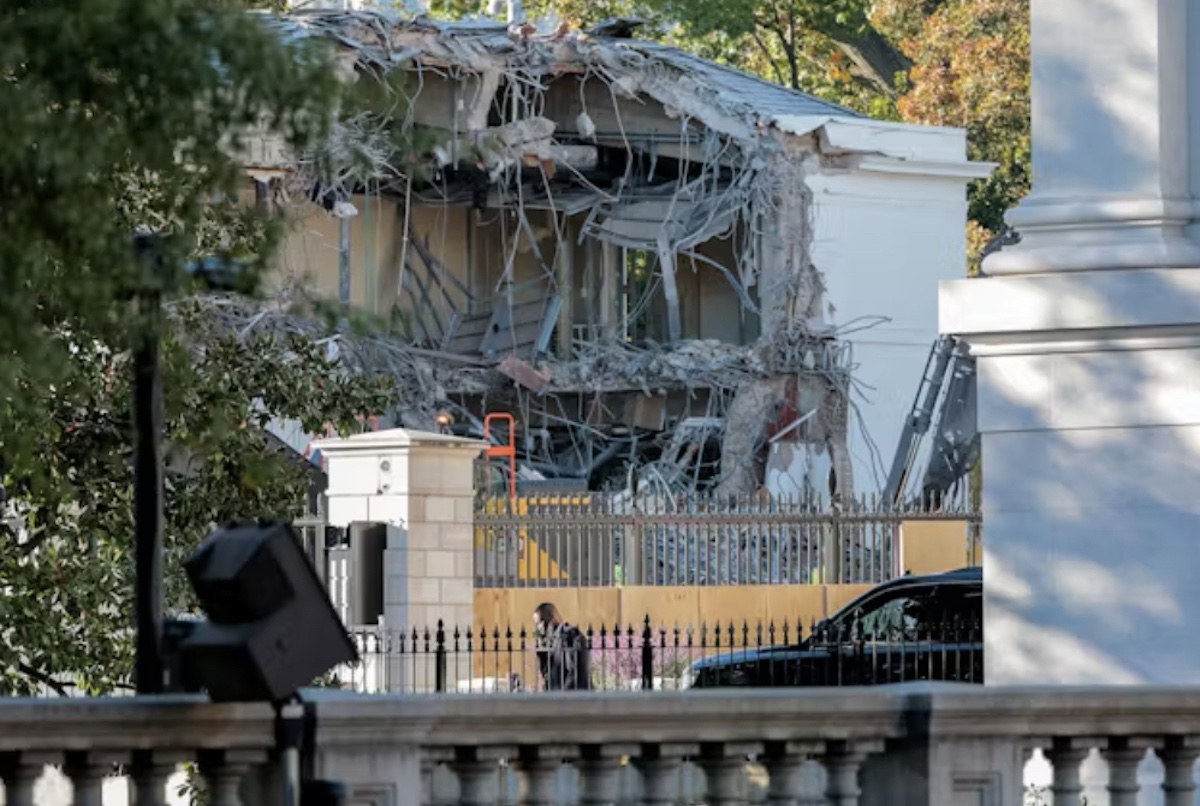
A twist to Obama’s joke emerged years later under the Trump administration: the East Wing adjacent to the White House was razed to make way for a 90,000-square-foot, lavishly finished ballroom reportedly costing roughly US$300 million. Described in renderings as resembling the ballroom at Mar-a-Lago and able to host nearly a thousand people, the new space will be far larger than any previous White House event room. Though Trump has said he doesn’t plan to name the space after himself—suggesting a generic name like “the presidential ballroom”—senior aides have reportedly referred to it internally as “The President Donald J. Trump Ballroom.” Unlike Obama’s jest, the project does not include a hotel, casino or golf course.
Trump did not attend the correspondents’ dinner during his first presidency and skipped it again during the first year of his second presidency. Whether the 2011 putdown directly led to the East Wing renovation is a matter of interpretation, but the episode illustrates how a public humiliation can become part of a political narrative—and, in this case, how a comedian’s jibe about turning the White House into Trump-branded real estate found an echo years later in an ambitious and controversial reworking of the executive complex.
Chris Lamb is a professor of journalism at Indiana University. This article was republished from The Conversation under a Creative Commons license.


