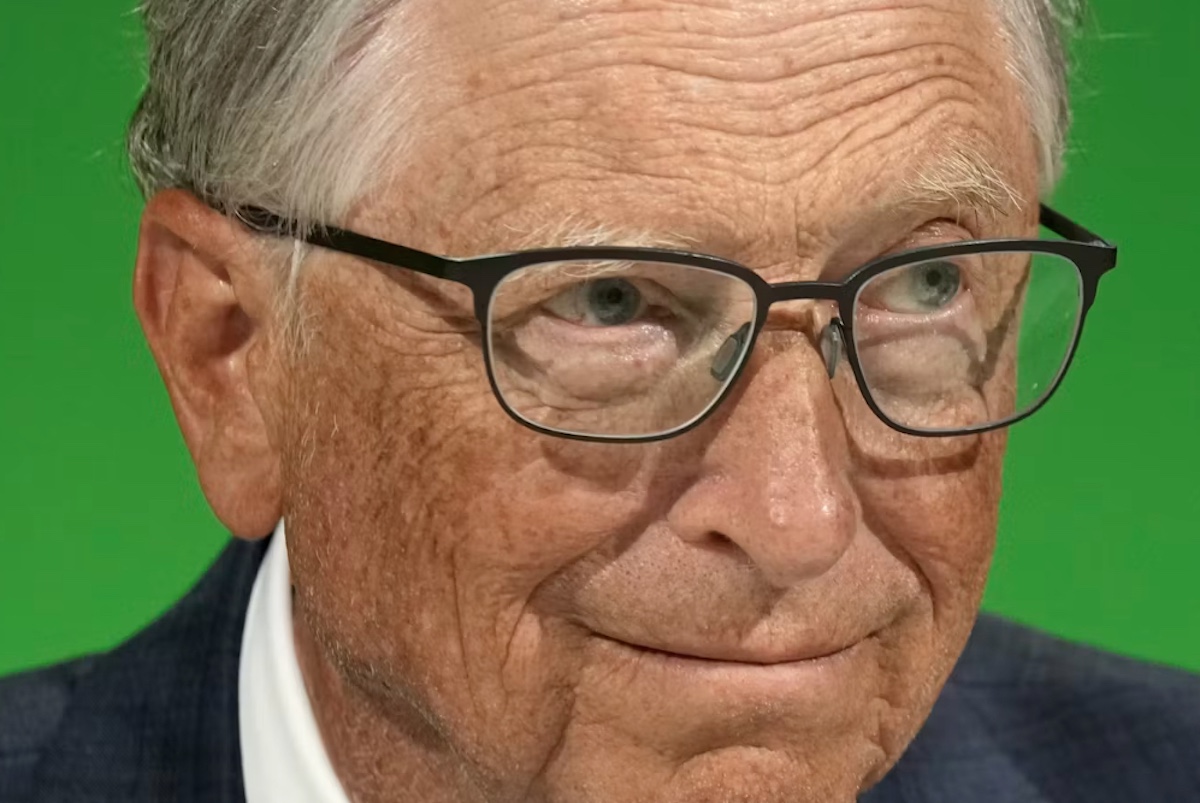

Shortly before COP30 in Brazil, Bill Gates published a long memo urging a shift in how the climate crisis is framed and addressed. The tech billionaire and philanthropist called for a “strategic pivot” that has roiled public debate: some climate skeptics hailed the memo as a recantation, while some scientists criticized its emphasis and tone.
Gates reiterates that climate change is a serious threat — “particularly for people in the poorest countries” — and that avoiding warming matters: “every tenth of a degree of heating that we prevent is hugely beneficial.” He also affirms support for pursuing net-zero emissions and urges sustained investment in global health and development, including vaccines. Still, his argument about strategy and messaging is what has sparked controversy.
The memo asks negotiators and policymakers to accept three “truths.” First, treat climate change as a grave problem but not an unavoidable civilization-ending catastrophe. Second, view temperature targets such as those in the Paris Agreement (e.g., keeping warming below 2 °C) as imperfect or incomplete metrics for measuring progress. Third, prioritize global health and economic prosperity as essential defenses against climate harms.
Central to Gates’ case is the role of technological innovation and economic development. He points to declining carbon intensity in some forecasts and to progress in technologies like electric vehicles, renewables, and battery storage as evidence that growth and innovation are already reducing emissions. Gates argues that future, higher-impact innovations will be driven by healthier, wealthier societies, making investments in development a crucial climate strategy.
This framing — especially the opening claim that climate change is “not the end of the world” — has been seized on by climate contrarians. Some social media accounts and news outlets ran misleading interpretations, claiming Gates admitted climate change is a hoax or “isn’t so bad.” Such readings ignore his repeated warnings about serious harms and his continued endorsement of decarbonization. Still, the initial tone dovetails with longstanding skeptic narratives that downplay urgency and paint mainstream climate messaging as alarmist.
Psychologically, climate denial often relies on binary thinking: if the crisis is not apocalyptic, then it can be dismissed as exaggerated. Gates’ rhetorical move away from “doomsday” language therefore provided a rhetorical opening for those who want to minimize climate action. Misleading headlines and social-media snippets amplified that effect, even when the memo’s substance calls for continued emissions cuts and broader public-health investments.
Some climate scientists reacted with frustration rather than relief. A key worry is Gates’ strong emphasis on technological “solutions” — including high-risk or still-maturing options such as small modular reactors, carbon capture and storage, and various geoengineering approaches. Critics fear this focus could distract from established mitigation measures, justify continued fossil-fuel use, or slow the political will for rapid emissions reductions.
Others object to what they see as downplaying of documented and projected harms. While Gates acknowledges substantial future warming (he cites scenarios that could reach around +2.9 °C by century’s end), some researchers say his framing softens the perceived urgency and risks glossing over systemic impacts. Commentators have invoked the longtime caution that neither apocalypse nor easy salvation are likely; policy must contend with complex, medium- and long-term risks rather than simplistic reassurances.
What follows is likely to be a heated, ongoing debate. Skeptics will repurpose portions of the memo as evidence that alarm is unnecessary. Scientists and communicators will wrestle with how to convey seriousness, uncertainty, and urgency without feeding polarizing narratives. Policymakers will face choices about balancing investments in innovation, deployment of proven low-carbon technologies, and broader development and health programs that Gates champions.
In the end, the memo does not alter the underlying science. It does, however, expose how sensitive climate politics is to tone and framing: the same argument — a call for pragmatic optimism about innovation combined with concern for vulnerable populations — can be read as reassurance, opportunism, or a dangerous distraction, depending on the reader’s priors and the media slice they encounter. The policy challenge remains the same: accelerate emissions reductions while investing in resilience, health, and technologies that can both cut carbon and improve lives.
Ryan M Katz‑Rosene is an associate professor in the School of Political Studies, cross‑appointed to Geography, Environment and Geomatics, University of Ottawa.
This article is republished from The Conversation under a Creative Commons license.

