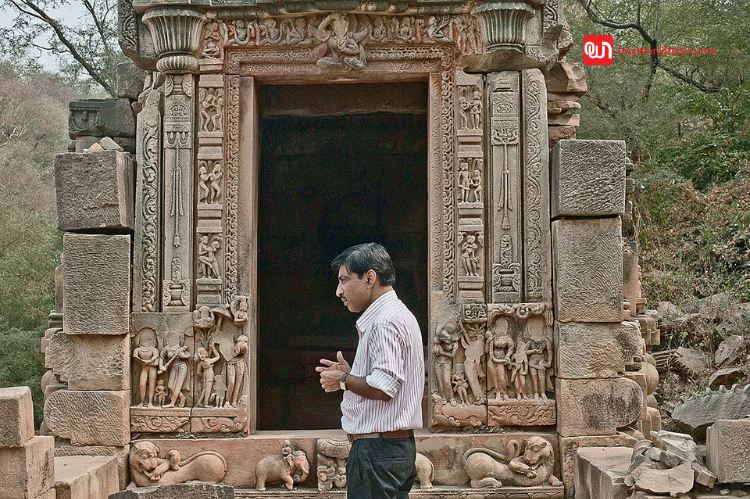

In recent years veteran archaeologist K. K. Muhammed has expressed deep concern about the slowing pace of temple restorations in India. He says conservation work has declined markedly since 2014, weakening efforts to preserve the country’s ancient heritage.
Once known for reconstructing more than 100 historic temples, Muhammed now says the body charged with such work has become a “wholly-paralysed body.” He points to changes in ASI decision-making and funding as key reasons. Previously, superintending archaeologists had discretionary funds of up to ₹25 lakh for on-site conservation; after 2014 that limit was cut to about ₹3 lakh. Muhammed contends this reduction effectively halted much on-the-ground restoration.
He also accuses the Archaeological Survey of India of shifting resources from core conservation to non-archaeological projects. Boundary walls, pathways, toilets, ticket counters, cafeterias and souvenir shops have been outsourced—often at high cost—while vital structural restoration has been neglected. “This period would go down in the history of ASI as the most unfortunate… when they knew the cost of toilets and cafeterias but not the value of temples and monuments,” he says.
Muhammed highlights concrete examples. At the Bateshwar temple complex, where earlier administrations reconstructed dozens of temples, he says no temple has been rebuilt in recent years. He calls this a “10-year temple void,” a lost decade that missed opportunities to revive and protect a substantial part of India’s temple heritage even as heritage tourism and preservation received more global attention.
He attributes the problem to excessive centralisation and bureaucratic inertia. Curtailing financial autonomy at the field level and prioritising peripheral infrastructure over archaeological needs, he argues, has undermined ASI’s conservation mandate. Decisions, he believes, appear increasingly driven by visible amenities and public optics rather than by archaeological priorities essential for structural integrity and authenticity.
The consequences are serious: without timely restoration many historic temples risk further decay or becoming irrecoverable, erasing tangible links to the past and weakening heritage tourism and cultural identity. Muhammed warns India could lag behind other countries that have successfully preserved monuments to build cultural identity and attract tourists.
He urges stakeholders—heritage authorities, governments and civil society—to reassess priorities. Conserving temples should extend beyond cosmetic upgrades to include proper archaeological restoration, structural stabilization and safeguarding authenticity. He calls for better funding, decentralised decision-making for archaeologists, transparent project planning and a return to core conservation practices.
Muhammed’s warnings are a plea for immediate, sustained action: heritage cannot wait if future generations are to inherit monuments, not just memories.

