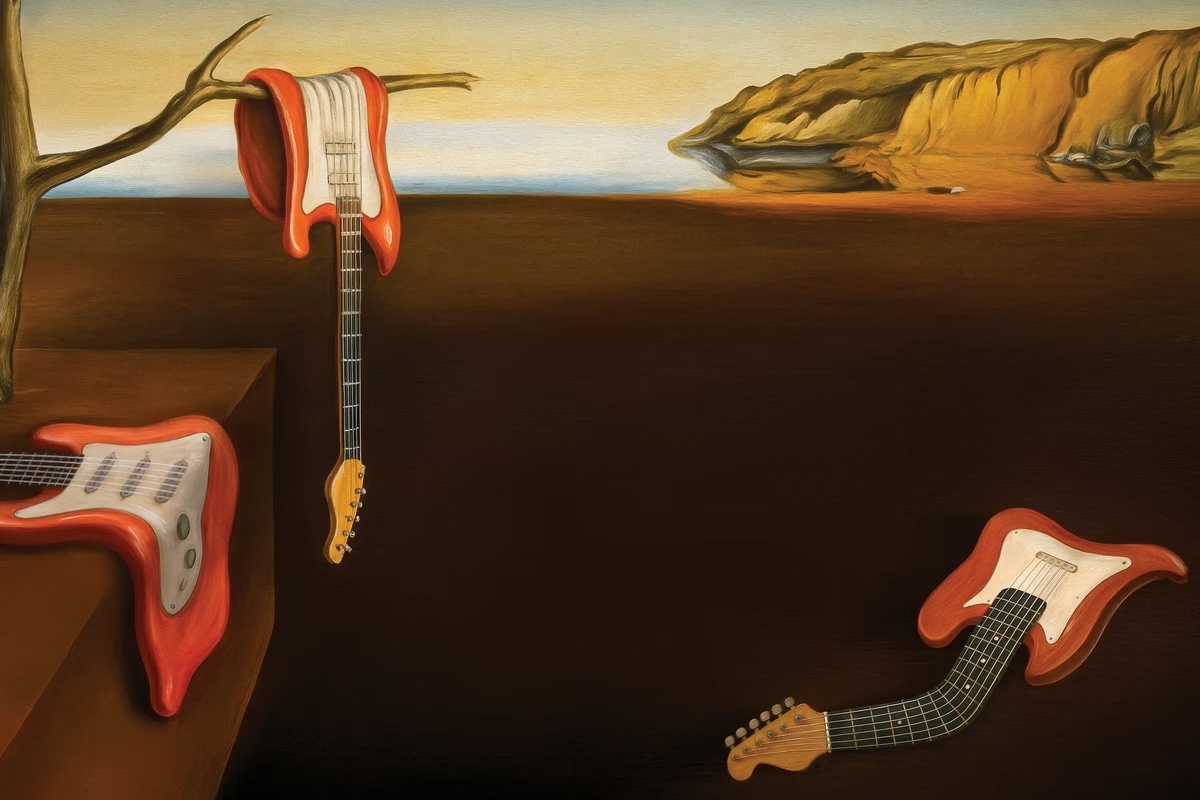

Has US culture stopped moving forward? Several recent commentators say it has. Adam Mastroianni points to growing risk aversion driven by longer lives and lower background risks, arguing that people and institutions increasingly avoid cultural gambles. Ted Gioia blames entertainment monopolies and attention-scraping algorithms that concentrate tastes and favor safe intellectual property over novelty. Both marshaling data across books, film, music, TV, and games, they show sequels, remakes, and adaptations multiplying while genuinely new work struggles for visibility.
The pushback is familiar: creativity has migrated into new forms — memes, short-form videos, podcasts, and niche online communities. Critics like Katherine Dee and Spencer Kornhaber argue that much invention now happens in fragmented, often ephemeral corners of the internet. That is true, but it only partly explains why ever-cheaper tools for making music and movies haven’t produced a flood of widely recognized originals to displace the endless stream of reboots.
David Marx’s Blank Space: A Cultural History of the Twenty-First Century tries to map where internet-era culture has been and, by implication, where it might go. It is largely a narrative tour of pop culture since 2000: the New York hipster scene, Pharrell and the Neptunes, Terry Richardson’s scandals, the Paris Hilton and Kim Kardashian phenomenon, poptimism, 4chan, the Obama-to-Trump arc, and countless smaller revolutions and disappointments. Marx’s talent is collecting an encyclopedic array of facts and turning them into a readable, coherent story: too often the internet’s dynamics lead to bland uniformity and aggressive commercial harvesting of subcultural innovations.
Those narrative strengths are also the book’s theoretical limits. Marx’s vivid reconstructions make the 2000s feel distinct and culturally alive, which undermines any simple claim that the decade was uniformly forgettable. He also gives too little weight to indie cinema in the 2000s and to foreign cultural imports — anime, manga, and other non‑US flows that reshaped American consumption. Those omissions matter because globalization can shift where innovation happens rather than indicate an absence of innovation.
A thornier problem for any sweeping cultural history is the long tail. Cultural consumption is increasingly dispersed. When attention centers on a few mainstream hits, naming those acts sufficiently defines an era. But if countless niche creators each serve small, devoted audiences, it becomes harder to summarize an era’s sound or style. Marx often writes with a Gen‑X hipster’s attachment to the Nirvana model — the indie upstart breaking into the mainstream — but such moments have always been exceptional. Most cultural life has been, and remains, a mix of dominant mass culture alongside many small communities cultivating their own tastes.
This helps reconcile the conflicting evidence. The distribution of attention may be growing more leptokurtic: both more concentrated around a few huge winners and more supportive of a broader, richer tail. In online video, graphic novels, some corners of TV, and fashion, niche creativity has exploded. The next influential style might come from a 21‑year‑old student in Japan, and a successful YouTuber or TikTok creator can thrive with tens of thousands of viewers rather than millions. Television now sustains many mid‑tier shows catering to particular humors and identities.
Yet other domains — especially trade books, traditional film, and parts of music — feel flatter. Discovery has been spotty: if there were a plentiful supply of great indie films and science fiction novels in the 2020s, overlapping communities and word‑of‑mouth should have surfaced more of them. The imbalance suggests genuine stagnation in some fields even as others flourish.
Why the mixed picture? Marx and others point to cultural forces such as poptimism, shifting gatekeeping, and the mainstreaming of subcultures by dominant platforms. Mastroianni’s risk‑aversion thesis explains institutional conservatism, while Gioia’s emphasis on monopoly power and dopamine‑optimizing algorithms explains how a few companies can stunt mainstream innovation. But none of these alone fully explains why indie creativity seems abundant in some media and scarce in others.
A complementary explanation is technological: new cultural forms often arise from new tools. The electric guitar and pickup mic opened decades of musical invention; camera phones and short‑form video enabled TikTok aesthetics. When a technology exposes broad, discoverable affordances, artists initially explore wildly and produce waves of novelty; after those low‑hanging possibilities are mined, progress slows and canonical forms settle in. That view is pessimistic because it ties artistic booms to technical breakthroughs, which are not easy to accelerate. But technology also shapes attention and distribution: algorithms and centralized platforms can make subculture exposure instantaneous, enabling rapid appropriation and commodification that dulls distinctiveness.
Marx’s proposed remedies emphasize slowing the harvest: fragment internet attention so subcultures can incubate before being assimilated, and restore stronger taste‑making through criticism, gatekeeping, and curated platforms that give art time and context to develop. Fragmentation — a shift from mass social platforms to private groups, niche communities, and decentralized interactions — could recreate the micropublics the internet once promised. Other fixes he gestures toward, like better criticism and curated spaces, are plausible but remain sketchy in the book.
In short, 21st‑century American culture is neither dead nor uniformly vital. Some media and communities show extraordinary niche creativity; others — notably much of book publishing, parts of film, and certain music sectors — look stalled. Causes are multiple: institutional risk aversion, platform monopolies and algorithmic incentives, the long tail of fragmented audiences, and the lifecycle of technological affordances. Reviving broad cultural innovation likely requires both new technological possibilities or platforms that change how art is made and found, and social changes that let subcultures grow without immediate commodification.
Blank Space is a spirited, readable account of these trends and a useful narrative of where internet‑era culture has been. It succeeds at diagnosis more than at prescription; readers who want a detailed roadmap for revival may have to wait for a follow‑up. Still, for anyone trying to understand why parts of American culture feel stuck and where genuine creativity still lives, Marx’s book is worth reading.


